
Selling a house with a wet basement in Ohio
By Elena Okafor · Updated 2026-09-29

A damp basement is one of the more common sticking points between buyers and sellers. It is easier to deal with when you know the rules, the options and the paperwork to gather before the inspection arrives.
This is general information, not legal or financial advice. Talk to a real estate professional or attorney about your sale. The reviews and review insights on this site reflect individual people’s experiences. Nothing here constitutes medical advice, so please consult a qualified health practitioner about your own situation.
Disclosure comes first
Ohio sellers of most residential property complete a disclosure form that asks about known conditions, including water leakage or accumulation in the basement. Answer from what you actually know, including past leaks that were later repaired. Hiding a known problem tends to create bigger trouble than the problem itself. Your agent or attorney can advise on the wording.
Your realistic options
| Option | What it involves | Things to weigh |
|---|---|---|
| Repair before listing | Hire a company, keep documents | Upfront cost; paperwork helps buyers |
| Disclose and offer a credit | Buyer arranges repair | Buyer may ask for a larger credit |
| Sell as is | No repair, full disclosure | Narrower buyer pool; price pressure |
| Get a diagnosis first | One or two assessments, no commitment | Gives you facts before choosing |
Which is best for you depends on timeline, cost and the market. A neutral first step is a written assessment, because “the basement leaks” can mean anything from condensation to a structural issue.
Match the fix to the cause
Condensation, a clogged gutter or a poorly graded yard are different from a bowing wall. A sound fix for a minor cause is quick, and a major cause may need a bigger plan. See our guide on telling DIY fixes from jobs for professionals if you are not sure which you have.
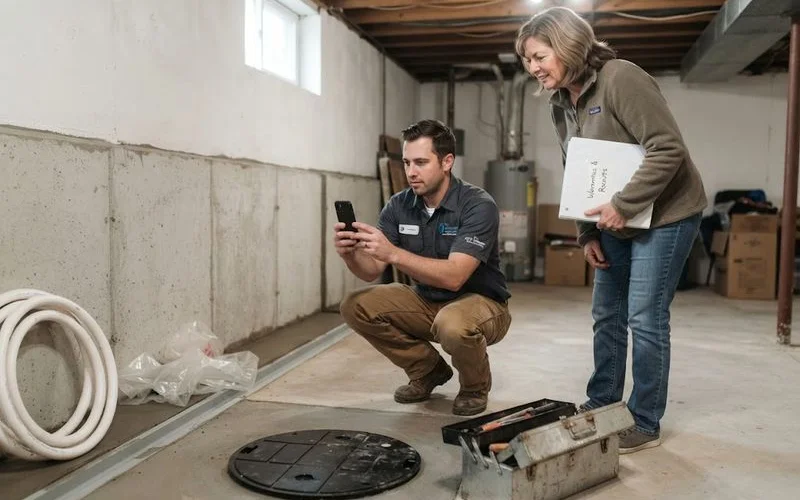
Paperwork buyers like to see
- The contract and scope of work.
- Receipts and permit records if any.
- Warranty documents, with transfer terms.
- Before and after photos.
- Maintenance records for the sump pump or dehumidifier.
If the warranty is transferable, check the steps and fees for transferring it to the new owner and do it properly, in writing.
If you plan to hire for the job
Get written estimates from more than one company and ask about timeline, since listing dates can be tight. Reviews on this site mention companies that book up fast and others with slow call-backs, so start early and confirm dates in writing.
How buyers tend to react
Buyers usually worry less about a documented, explained issue than about a surprise. A seller who can say “water came in at the floor joint after heavy rain, here is what was done and here is the paperwork” looks organized. A seller who says nothing and has fresh paint on one wall invites suspicion. Buyers’ inspectors often recommend a follow-up assessment when they see staining, so expect questions even if you have repaired the problem. Having the contractor’s contact details and the warranty ready lets you answer fast.
Be careful with claims
Avoid telling buyers the basement is “fixed forever” or “totally dry.” Describe what was done, when, and what the warranty states. Anything broader invites disputes.
Timing
Basements show their problems after heavy rain and during spring melt. If you list in a dry season, a buyer’s inspector may not see water, but a neighbor or a later storm might. Plan on being open about history either way.
Next step
Find local companies from the Trumbull County Waterproofing Guide home page and see how listings are scored in our rubric. Water that shows up each spring is the usual trigger, and the guide on spring thaw basement leaks explains why.
Questions people ask
- Do I have to disclose a wet basement in Ohio?
- Ohio's residential property disclosure form asks sellers about known water problems. Exact obligations depend on your situation, so check the form and talk to your real estate agent or an attorney.
- Should I waterproof before listing?
- It depends on the cause, your timeline and the market. Some sellers repair, some offer credits, some sell as is. A local agent can describe how buyers in your area react.
- Will a buyer's inspector find basement water?
- Inspectors look for stains, efflorescence, cracks and musty odor. Assume visible signs will be noticed.
- Do I need to keep waterproofing records?
- Yes. Contracts, receipts and warranties help buyers see what was done, and a transferable warranty can be part of your pitch.